mirror of
https://github.com/robbert-vdh/yabridge.git
synced 2026-05-07 03:50:11 +02:00
 Robbert van der Helm
440 lines
22 KiB
Markdown
440 lines
22 KiB
Markdown
# yabridge
|
|
|
|
[](https://github.com/robbert-vdh/yabridge/actions?query=workflow%3A%22Automated+builds%22+branch%3Amaster)
|
|
|
|
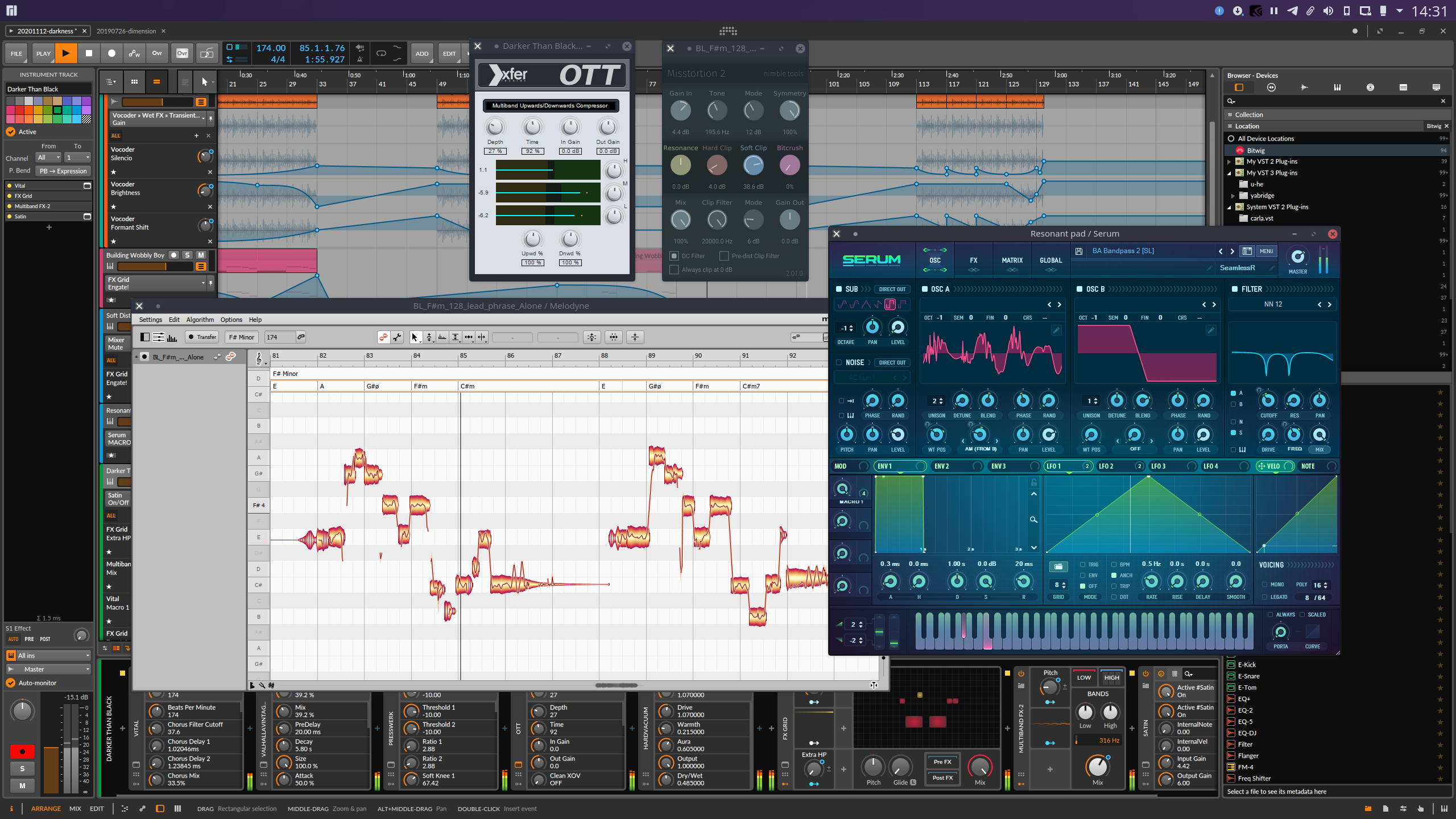
Yet Another way to use Windows VST plugins on Linux. Yabridge seamlessly
|
|
supports running both 64-bit Windows VST2 plugins as well as 32-bit Windows VST2
|
|
plugins in a 64-bit Linux VST host. This project aims to be as transparent as
|
|
possible to achieve the best possible plugin compatibility while also staying
|
|
easy to debug and maintain.
|
|
|
|
|
|
|
|
## Tested with
|
|
|
|
Yabridge has been verified to work correctly in the following VST hosts using
|
|
Wine Staging 5.8:
|
|
|
|
- Bitwig Studio 3.1 and the beta releases of 3.2
|
|
- Carla 2.1
|
|
- Ardour 5.12
|
|
- Mixbus 6.0.702
|
|
- REAPER 6.09
|
|
- Renoise 3.2.1
|
|
|
|
Please let me know if there are any issues with other VST hosts.
|
|
|
|
## Usage
|
|
|
|
You can either download a prebuilt version of yabridge through the GitHub
|
|
[releases](https://github.com/robbert-vdh/yabridge/releases) section, or you can
|
|
compile it from source using the instructions in the [build](#Building) section
|
|
below.
|
|
|
|
There are two ways to use yabridge. If your host supports plugin sanboxing, then
|
|
the recommended installation method is to use symbolic links. The main advantage
|
|
here is that you will be able to update yabridge for all of your plugins in one
|
|
go, and it avoids having to either install outside of your home directory or to
|
|
set up environment variables. Sadly, not all hosts support this behavior. The
|
|
copy-based installation will work for all hosts.
|
|
|
|
### Symlinking (recommended for Bitwig Studio)
|
|
|
|
This is the recommended way to use yabridge if you're using Bitwig Studio or any
|
|
other VST host that supports _invididually sandboxed plugins_. If you use Bitwig
|
|
Studio and you do not want to use the '_Individually_' plugin hosting mode, then
|
|
you should follow the instructions from the [copying](#Copying) section below
|
|
instead. For this installation method you can either use the prebuilt binaries
|
|
from the [GitHub releases](https://github.com/robbert-vdh/yabridge/releases)
|
|
section, or you can build yabridge directly from source. If you use the prebuilt
|
|
binaries, then you can simply extract them to `~/.local/share/yabridge` or to
|
|
any other location in your home directory. If you choose to build from source,
|
|
then you can use the compiled binaries directly from the `build/` directory. For
|
|
the section below I'm going to assume you've extracted the files to
|
|
`~/.local/share/yabridge`.
|
|
|
|
To set up yabridge for a VST plugin called `~/.wine/drive_c/Program Files/Steinberg/VstPlugins/plugin.dll`, simply create a symlink from
|
|
`~/.local/share/yabridge/libyabridge.so` to `~/.wine/drive_c/Program Files/Steinberg/VstPlugins/plugin.so`, like so:
|
|
|
|
```shell
|
|
ln -s ~/.local/share/yabridge/libyabridge.so "$HOME/.wine/drive_c/Program Files/Steinberg/VstPlugins/plugin.so"
|
|
```
|
|
|
|
As an example, if you wanted to set up yabridge for all VST plugins under
|
|
`~/.wine/drive_c/Program Files/Steinberg/VstPlugins`, you could run the
|
|
following script in Bash. This will skip any `.dll` files that are not actually
|
|
VST plugins.
|
|
|
|
```shell
|
|
yabridge_home=$HOME/.local/share/yabridge
|
|
plugin_dir="$HOME/.wine/drive_c/Program Files/Steinberg/VstPlugins"
|
|
|
|
find "$plugin_dir" -type f -iname '*.dll' -print0 |
|
|
xargs -0 -P$(nproc) -I{} bash -c "(winedump -j export '{}' | grep -qE 'VSTPluginMain|main|main_plugin') && printf '{}\0'" |
|
|
sed -z 's/\.dll$/.so/' |
|
|
xargs -0 -n1 ln -sf "$yabridge_home/libyabridge.so"
|
|
```
|
|
|
|
### Copying
|
|
|
|
This installation method will work for all VST hosts. This works similar to the
|
|
procedure described above, but using copies of `libyabridge.so` instead of
|
|
symlinks. For this you will have to make sure that all four of the
|
|
`yabridge-host*` files from the downloaded archive are somewhere in the search
|
|
path. The recommended way to do this is to download yabridge from the GitHub
|
|
[releases](https://github.com/robbert-vdh/yabridge/releases) section, extract
|
|
all the files to `~/.local/share/yabridge`, and then add that directory to your
|
|
`$PATH` environment variable. Alternatively there's an [AUR
|
|
package](https://aur.archlinux.org/packages/yabridge/) available if you're
|
|
running Arch or Manjaro.
|
|
|
|
The setup process for a plugin is similar to the procedure described above.
|
|
Using the same example, if you have extracted yabridge's files to
|
|
`~/.local/share/yabridge` and you want to set up yabridge for a VST plugin
|
|
called `~/.wine/drive_c/Program Files/Steinberg/VstPlugins/plugin.dll`, then you
|
|
should copy `~/.local/share/yabridge/libyabridge.so` to `~/.wine/drive_c/Program Files/Steinberg/VstPlugins/plugin.so`, like so:
|
|
|
|
```shell
|
|
cp ~/.local/share/yabridge/libyabridge.so "$HOME/.wine/drive_c/Program Files/Steinberg/VstPlugins/plugin.so"
|
|
```
|
|
|
|
To install yabridge for all VST2 plugins under `~/.wine/drive_c/Program Files/Steinberg/VstPlugins` you could use the following script:
|
|
|
|
```shell
|
|
yabridge_home=$HOME/.local/share/yabridge
|
|
plugin_dir="$HOME/.wine/drive_c/Program Files/Steinberg/VstPlugins"
|
|
|
|
find "$plugin_dir" -type f -iname '*.dll' -print0 |
|
|
xargs -0 -P$(nproc) -I{} bash -c "(winedump -j export '{}' | grep -qE 'VSTPluginMain|main|main_plugin') && printf '{}\0'" |
|
|
sed -z 's/\.dll$/.so/' |
|
|
xargs -0 -n1 cp "$yabridge_home/libyabridge.so"
|
|
```
|
|
|
|
### DAW setup
|
|
|
|
Finally, open your DAW's VST location configuration and tell it to look for
|
|
plugins under `~/.wine/drive_c/Program Files/Steinberg/VstPlugins`. That way it
|
|
will automatically pick up any of your Windows VST2 plugins.
|
|
|
|
### Bitbridge
|
|
|
|
If you have downloaded the prebuilt version of yabridge or if have followed the
|
|
instructions from the [bitbridge](#32-bit-bitbridge) section below, then
|
|
yabridge is also able to load 32-bit VST plugins. The installation procedure for
|
|
32-bit plugins is exactly the same as for 64-bit plugins. Yabridge will
|
|
automatically detect whether a plugin is 32-bit or 64-bit on startup and it will
|
|
handle it accordingly.
|
|
|
|
### Plugin groups
|
|
|
|
TODO: Document
|
|
|
|
### Wine prefixes
|
|
|
|
It is also possible to use yabridge with multiple Wine prefixes. Yabridge will
|
|
automatically detect and use the Wine prefix the plugin's `.dll` file is located
|
|
in. Alternatively you could set the `WINEPREFIX` environment variable to
|
|
override the Wine prefix for all instances of yabridge.
|
|
|
|
## Troubleshooting common issues
|
|
|
|
- If you're using the copying installation method and plugins are getting
|
|
skipped or blacklisted immediately when your VST host is scanning them, then
|
|
this is likely caused by `yabridge-host.exe` not being found in your search
|
|
path. Make sure the directory you installed yabridge to (e.g.
|
|
`~/.local/share/yabridge`) is listed in your `PATH` environment variable. For
|
|
instance, if you're using the default Bash shell, then you could append this
|
|
line to `~/.bash_profile` (not to `~/.bashrc`):
|
|
|
|
```shell
|
|
export PATH="$HOME/.local/share/yabridge:$PATH"
|
|
```
|
|
|
|
You'll likely have to log out and back in again for this to take effect for
|
|
applications not launched through a terminal. To check whether everything's
|
|
set up correctly you could run `which yabridge-host.exe` in a terminal. If it
|
|
is, then that should print a path to `yabridge-host.exe`.
|
|
|
|
- If you're using the symlink installation method and you're seeing multiple
|
|
duplicate instances of the same plugin, or after opening one plugin every
|
|
subsequent plugin opens as another instance of the first plugin you've opened,
|
|
then your VST host is not sandboxing individual plugins. If you're using
|
|
Bitwig Studio, make sure the '_Individual_' plugin hosting mode is enabled and
|
|
all of the checkboxes in the list of sandboxing exceptions are left unchecked.
|
|
|
|
- Sometimes left over Wine processes can cause problems. Run `wineserver -k` to
|
|
terminate Wine related in the current or default Wine prefix.
|
|
|
|
- Time out errors during plugin scanning are caused by the Wine process not
|
|
being able to start. There should be plugin output messages in your DAW or
|
|
terminal that with more information on what went wrong.
|
|
|
|
## Runtime dependencies and known issues
|
|
|
|
Any VST2 plugin should function out of the box, although some plugins will need
|
|
some additional dependencies for their GUIs to work correctly. Notable examples
|
|
include:
|
|
|
|
- **Native Instruments** plugins work, but Native Access is unable to finish
|
|
installing the plugins. To work around this you can open the .iso file
|
|
downloaded to your downloads directory and run the installer directly. When
|
|
activating the plugins you may have to cancel the self-updating in NI Service
|
|
Center.
|
|
- **Serum** requires you to disable `d2d1.dll` in `winecfg` and to install
|
|
`gdiplus` through `winetricks`.
|
|
|
|
Aside from that, these are some known caveats:
|
|
|
|
- Plugins by **KiloHearts** have file descriptor leaks when esync is enabled,
|
|
causing Wine and yabridge to eventually stop working after the system hits the
|
|
open file limit. This sadly cannot be fixed in yabridge. Simply unset
|
|
`WINEESYNC` while using yabridge if this is an issue.
|
|
- Most recent **iZotope** plugins don't have a functional GUI in a typical out
|
|
of the box Wine setup because of missing dependencies. Please let me know if
|
|
you know which dependencies are needed for these plugins to render correctly.
|
|
- Some plugins, such as **Fabfilter Pro-Q 3**, are able to communicate between
|
|
different instances of the same plugin by relying on the fact that they're all
|
|
loaded into the same process. Right now this is something that yabridge does
|
|
not do as it would break any form of sandboxing, meaning that if one plugin
|
|
were to crash, all other plugins would go down with it. If this is something
|
|
you need for your workflow, please let me know.
|
|
|
|
There are also some VST2.X extension features that have not been implemented yet
|
|
because I haven't needed them myself. Let me know if you need any of these
|
|
features for a certain plugin or VST host:
|
|
|
|
- Double precision audio (`processDoubleReplacing`).
|
|
- SysEx messages. In addition to MIDI, VST 2.4 also supports SysEx. I don't know
|
|
of any hosts or plugins that use this, but please let me know if this is
|
|
needed for something.
|
|
- Vendor specific extension (for instance, for
|
|
[REAPER](https://www.reaper.fm/sdk/vst/vst_ext.php), though most of these
|
|
extension functions will work out of the box without any modifications).
|
|
|
|
## Building
|
|
|
|
To compile yabridge, you'll need [Meson](https://mesonbuild.com/index.html) and
|
|
the following dependencies:
|
|
|
|
- gcc (tested using GCC 9.2)
|
|
- A Wine installation with `winegcc` and the development headers. The latest
|
|
commits contain a workaround for a winelib [compilation
|
|
issue](https://bugs.winehq.org/show_bug.cgi?id=49138) with Wine 5.7+.
|
|
- Boost with at least `libboost_filesystem.a`
|
|
- xcb
|
|
|
|
The following dependencies are included in the repository as a Meson wrap:
|
|
|
|
- bitsery
|
|
- tomlplusplus
|
|
|
|
The project can then be compiled as follows:
|
|
|
|
```shell
|
|
meson setup --buildtype=release --cross-file cross-wine.conf build
|
|
ninja -C build
|
|
```
|
|
|
|
After you've finished building you can follow the instructions under the
|
|
[usage](#Usage) section on how to set up yabridge.
|
|
|
|
### 32-bit bitbridge
|
|
|
|
It is also possible to compile a host application for yabridge that's compatible
|
|
with 32-bit plugins such as old SynthEdit plugins. This will allow yabridge to
|
|
act as a bitbirdge, allowing you to run old 32-bit only Windows VST2 plugins in
|
|
a modern 64-bit Linux VST host. For this you'll need to have installed the 32
|
|
bit versions of the Boost and XCB libraries. This can then be set up as follows:
|
|
|
|
```shell
|
|
# Enable the bitbridge on an existing build
|
|
meson configure build -Duse-bitbridge=true
|
|
# Or configure a new build from scratch
|
|
meson setup --buildtype=release --cross-file cross-wine.conf -Duse-bitbridge=true build
|
|
|
|
ninja -C build
|
|
```
|
|
|
|
This will produce two files called `yabridge-host-32.exe` and
|
|
`yabridge-host-32.exe.so`. Yabridge will detect whether the plugin you're trying
|
|
to load is 32-bit or 64-bit, and will run either `yabridge-host.exe` or
|
|
`yabridge-host-32.exe` accordingly.
|
|
|
|
## Debugging
|
|
|
|
Wine's error messages and warning are usually very helpful whenever a plugin
|
|
doesn't work right away. Sadly this information is not always available. Bitwig,
|
|
for instance, hides a plugin's STDOUT and STDERR streams from you. To make it
|
|
easier to debug malfunctioning plugins, yabridge offers these two environment
|
|
variables:
|
|
|
|
- `YABRIDGE_DEBUG_FILE=<path>` allows you to write the Wine VST host's STDOUT
|
|
and STDERR messages to a file. For instance, you could launch your DAW with
|
|
`env YABRIDGE_DEBUG_FILE=/tmp/yabridge.log <daw>`, and then use `tail -F /tmp/yabridge.log`
|
|
to keep track of that file. If this option is not present then yabridge will
|
|
write all of its debug messages to STDERR instead.
|
|
- `YABRIDGE_DEBUG_LEVEL={0,1,2}` allows you to set the verbosity of the debug
|
|
information. Each level increases the amount of debug information printed:
|
|
|
|
- A value of `0` (the default) means that yabridge will only write messages
|
|
from the Wine process and some basic information such about the plugin being
|
|
loaded and the Wine prefix being used.
|
|
- A value of `1` will log information about most events and function calls
|
|
sent between the VST host and the plugin. This filters out some noisy events
|
|
such as `effEditIdle()` and `audioMasterGetTime()` since those are sent tens
|
|
of times per second by for every plugin.
|
|
- A value of `2` will cause all of the events to be logged, including the
|
|
events mentioned above. This is very verbose but it can be crucial for
|
|
debugging plugin-specific problems.
|
|
|
|
More detailed information about these debug levels can be found in
|
|
`src/common/logging.h`.
|
|
|
|
Wine's own [logging facilities](https://wiki.winehq.org/Debug_Channels) can also
|
|
be very helpful when diagnosing problems. In particular the `+message` and
|
|
`+relay` channels are very useful to trace the execution path within loaded VST
|
|
plugin itself.
|
|
|
|
### Attaching a debugger
|
|
|
|
When needed, I found the easiest way to debug the plugin to be to load it in an
|
|
instance of Carla with gdb attached:
|
|
|
|
```shell
|
|
env YABRIDGE_DEBUG_FILE=/tmp/yabridge.log YABRIDGE_DEBUG_LEVEL=2 carla --gdb
|
|
```
|
|
|
|
Doing the same thing for the Wine VST host can be a bit tricky. You'll need to
|
|
launch winedbg in a seperate detached terminal emulator so it doesn't terminate
|
|
together with the plugin, and winedbg can be a bit picky about the arguments it
|
|
accepts. I've already set this up behind a feature flag for use in KDE Plasma.
|
|
Other desktop environments and window managers will require some slight
|
|
modifications in `src/plugin/plugin-bridge.cpp`. To enable this, simply run:
|
|
|
|
```shell
|
|
meson configure build --buildtype=debug -Duse-winedbg=true
|
|
```
|
|
|
|
## Architecture
|
|
|
|
The project consists of two components: a Linux native VST plugin
|
|
(`libyabridge.so`) and a VST host that runs under Wine
|
|
(`yabridge-host.exe`/`yabridge-host.exe.so`, and
|
|
`yabridge-host-32.exe`/`yabridge-host-32.exe.so` if the bitbirdge is enabled).
|
|
I'll refer to the copy of or the symlink to `libyabridge.so` as _the plugin_,
|
|
the native Linux VST host that's hosting the plugin as _the native VST host_,
|
|
the Wine VST host application that's hosting a Windows `.dll` file as _the Wine
|
|
VST host_, and the Windows VST plugin that's being loaded in the Wine VST host
|
|
as the _Windows VST plugin_. The whole process works as follows:
|
|
|
|
1. Some copy of or a symlink to `libyabridge.so` gets loaded as a VST plugin in
|
|
a Linux VST host. This file should have been renamed to match a Windows VST
|
|
plugin `.dll` file in the same directory. For instance, if there's a
|
|
`Serum_x64.dll` file you'd like to bridge, then there should be a symlink to
|
|
`libyabridge.so` named `Serum_x64.so`.
|
|
2. The plugin first attempts to locate and determine:
|
|
|
|
- The Windows VST plugin `.dll` file that should be loaded.
|
|
|
|
- The architecture of that VST plugin file. This is done by inspecting the
|
|
headers if the `.dll` file.
|
|
|
|
- The location of the Wine VST host. This will depend on the architecture
|
|
detected for the plugin. If the plugin was compiled for the `x86_64`
|
|
architecture or the 'Any CPU' target, then we will look for
|
|
`yabridge-host.exe`. If the plugin was compiled for the `x86` architecture,
|
|
when we'll search for `yabridge-host-32.exe`.
|
|
|
|
We will first search for this file alongside the actual location of
|
|
`libyabridge.so`. This is useful for development, as it allows you to use a
|
|
symlink to `libyabridge.so` directly from the build directory causing
|
|
yabridge to automatically pick up the right version of the Wine VST host.
|
|
If this file cannot be found, then it will fall back to searching through
|
|
the search path.
|
|
|
|
- The Wine prefix the plugin is located in. If the `WINEPREFIX` environment
|
|
variable is specified, then that will be used instead.
|
|
|
|
3. The plugin then sets up a Unix domain socket endpoint to communicate with the
|
|
Wine VST host somewhere in a temporary directory and starts listening on it.
|
|
I chose to communicate over Unix domain sockets rather than using shared
|
|
memory directly because this way you get low latency communication with
|
|
without any busy waits or manual synchronisation for free. The added benefit
|
|
is that it also makes it possible to send arbitrarily large chunks of data
|
|
without having to split it up first. This is useful for transmitting audio
|
|
and preset data which may have any arbitrary size.
|
|
4. The plugin launches the Wine VST host in the detected wine prefix, passing
|
|
the name of the `.dll` file it should be loading and the path to the Unix
|
|
domain socket that was just created as its arguments.
|
|
5. Communication gets set up using multiple sockets over the end point created
|
|
previously. This allows us to easily handle multiple data streams from
|
|
different threads using blocking read operations for synchronization. Doing
|
|
this greatly simplifies the way communication works without compromising on
|
|
latency. The following types of events each get their own socket:
|
|
|
|
- Calls from the native VST host to the plugin's `dispatcher()` function.
|
|
These get forwarded to the Windows VST plugin through the Wine VST host.
|
|
- Calls from the native VST host to the plugin's `dispatcher()` function with
|
|
the `effProcessEvents` opcode. These also get forwarded to the Windows VST
|
|
plugin through the Wine VST host. This has to be handled separately from
|
|
all other events because of limitations of the Win32 API. Without doing
|
|
this the plugin would not be able to receive any MIDI events while the GUI
|
|
is being resized or a dropdown menu or message box is shown.
|
|
- Host callback calls from the Windows VST plugin through the
|
|
`audioMasterCallback` function. These get forwarded to the native VST host
|
|
through the plugin.
|
|
|
|
Both the `dispatcher()` and `audioMasterCallback()` functions are handled
|
|
in the same way, with some minor variations on how payload data gets
|
|
serialized depending on the opcode of the event being sent. See the section
|
|
below this for more details on this procedure.
|
|
|
|
- Calls from the native VST host to the plugin's `getParameter()` and
|
|
`setParameter()` functions. Both functions get forwarded to the Windows VST
|
|
plugin through the Wine VST host using a single socket because they're very
|
|
similar and don't need any complicated behaviour.
|
|
- Calls from the native VST host to the plugin's `processReplacing()`
|
|
function. This function gets forwarded to the Windows VST plugin through
|
|
the Wine VST. In the rare event that the plugin does not support
|
|
`processReplacing()` and only supports The deprecated commutative
|
|
`process()` function, then the Wine VST host will emulate the behavior of
|
|
`processReplacing()` instead.
|
|
|
|
The operations described above involving the host -> plugin `dispatcher()`and
|
|
plugin -> host `audioMaster()` functions are all handled by first serializing
|
|
the function parameters and any payload data into a binary format so they can
|
|
be sent over a socket. The objects used for encoding both the requests and
|
|
the responses for theses events can be found in `src/common/serialization.h`,
|
|
and the functions that actually read and write these objects over the sockets
|
|
are located in `src/common/communication.h`. The actual binary serialization
|
|
is handled using [bitsery](https://github.com/fraillt/bitsery).
|
|
|
|
Actually sending and receiving the events happens in the `send_event()` and
|
|
`receive_event()` functions. When calling either `dispatch()` or
|
|
`audioMaster()`, the caller will oftentimes either pass along some kind of
|
|
data structure through the void pointer function argument, or they expect the
|
|
function's return value to be a pointer to some kind of struct provided by
|
|
the plugin or host. The behaviour for reading from and writing into these
|
|
void pointers and returning pointers to objects when needed is encapsulated
|
|
in the `DispatchDataConverter` and `HostCallbackDataCovnerter` classes for
|
|
the `dispatcher()` and `audioMaster()` functions respectively. For operations
|
|
involving the plugin editor there is also some extra glue in
|
|
`Vst2Bridge::dispatch_wrapper`. On the receiving end of the function calls,
|
|
the `passthrough_event()` function which calls the callback functions and
|
|
handles the marshalling between our data types created by the
|
|
`*DataConverter` classes and the VST API's different pointer types. This
|
|
behaviour is separated from `receive_event()` so we can handle MIDI events
|
|
separately. This is needed because a select few plugins only store pointers
|
|
to the received events rather than copies of the objects. Because of this,
|
|
the received event data must live at least until the next audio buffer gets
|
|
processed so it needs to be stored temporarily.
|
|
|
|
6. The Wine VST host loads the Windows VST plugin and starts forwarding messages
|
|
over the sockets described above.
|
|
7. After the Windows VST plugin has started loading we will forward all values
|
|
from the plugin's `AEffect` struct to the Linux native VST plugin over the
|
|
`dispatcher()` socket. This is only done once at startup. After this point
|
|
the plugin will stop blocking and has finished loading.
|
|
|
|
TODO: Document plugin groups
|